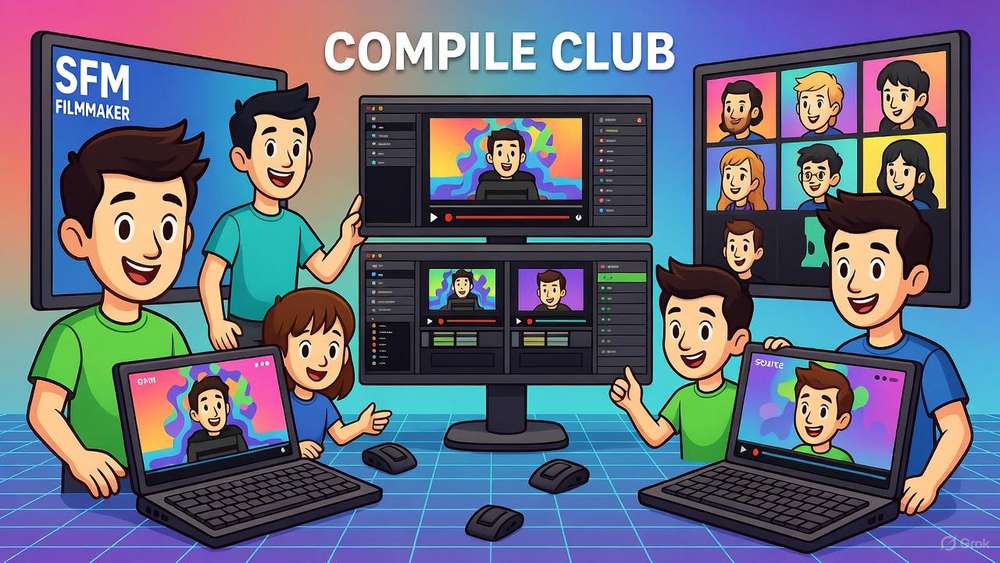
SFM Compile Club
In the fast-paced world of digital animation, where ideas spark and stories come alive through code and creativity, few tools stand as versatile as Source Filmmaker (SFM). Developed by Valve, this free software has empowered countless artists to craft cinematic masterpieces from game assets, turning simple scenes into breathtaking narratives. But behind every polished animation lies a crucial step: compilation—the process of rendering frames, syncing audio, and exporting a project into a shareable video. This is where the SFM Compile Club shines, serving as a beacon for animators worldwide.
The SFM Compile Club is more than just a name; it’s a thriving online community dedicated to mastering this essential phase of animation production. Whether you’re a beginner struggling with your first render or a seasoned creator optimizing complex workflows, this club offers the tools, guidance, and camaraderie needed to succeed. Founded in the early 2010s amid the rise of machinima and fan animations, the club has evolved into a global hub, fostering collaboration and innovation. As of November 2025, with over 50,000 active members across platforms like Discord, Reddit, and Steam Workshop, it’s never been a better time to dive in. This article explores the club’s origins, benefits, and practical advice, helping you harness its power to transform your SFM projects.
What is Source Filmmaker and Why Compilation Matters
Source Filmmaker, often abbreviated as SFM, burst onto the scene in 2012 as a free tool bundled with Team Fortress 2. It allows users to manipulate in-game models, environments, and physics to create custom animations. From humorous skits to epic short films, SFM’s flexibility has made it a staple in gaming culture, powering viral content on YouTube and beyond.
At the heart of any SFM project is the compilation stage. This isn’t mere exporting; it’s a meticulous blend of rendering high-definition frames, applying dynamic lighting, and integrating sound design. A poorly compiled animation can suffer from flickering textures, desynced audio, or bloated file sizes, diminishing hours of hard work. The SFM Compile Club demystifies this process, emphasizing efficiency and quality. Members often describe it as the “final boss” of animation—challenging yet rewarding, where technical prowess meets artistic vision.
The Role of SFM in Modern Animation
Today, SFM extends far beyond gaming parodies. Animators use it for educational videos, promotional content, and even professional portfolios. Its integration with the Source engine ensures compatibility with assets from titles like Half-Life and Dota 2, making it accessible for hobbyists. However, without proper compilation, these assets remain trapped in the editor. The club addresses this by promoting best practices, such as using image sequences for safer renders and batch processing for multi-scene projects.
The Origins and Evolution of SFM Compile Club
The Club traces its roots to informal Steam forums around 2013, when early adopters began sharing tips on rendering issues. What started as scattered threads evolved into structured Discord servers by 2015, driven by a core group of animators frustrated with isolated trial-and-error workflows. By 2018, the club formalized with dedicated websites like sfmcompileclub.org, offering tutorials and asset libraries.
Over the years, the club has adapted to SFM’s updates, incorporating features like advanced particle effects from the 2020 engine overhaul. Key milestones include the launch of “Compile Nights” in 2019—live sessions where members troubleshoot in real-time—and the 2022 expansion to multilingual resources, welcoming creators from Europe, Asia, and Latin America. As of 2025, the club’s growth reflects broader trends in remote collaboration, with partnerships alongside events like SymfonyCon for tech-savvy animators.
This evolution underscores the club’s ethos: collaboration over competition. Unlike rigid academies, it thrives on peer-to-peer learning, ensuring every member contributes to a shared knowledge base.
Key Benefits of Joining SFM Compile Club
Engaging with the SFM Compile Club unlocks a wealth of advantages that elevate your animation game. Here’s why thousands flock to its digital doors:
- Expert Guidance on Compilation Challenges: From fixing material errors to optimizing GPU renders, the club’s forums are a goldmine of solutions. Members report cutting render times by up to 40% through shared scripts.
- Asset Sharing and Resource Libraries: Access free models, rigs, and maps via Steam Workshop integrations. This democratizes high-end production, leveling the playing field for newcomers.
- Collaborative Opportunities: Group projects, like themed anthologies, allow you to co-create with global talents. Past collaborations have garnered millions of views on platforms like YouTube.
- Skill-Building Through Events: Regular workshops cover everything from basic timelines to advanced post-processing, building confidence one frame at a time.
- Career Boosts: Many alumni credit the club for landing gigs in game studios or freelance animation. Networking here often leads to mentorships with industry pros.
These perks aren’t just theoretical; they’re backed by real stories of creators who turned hobby projects into full-time passions.
How to Get Started with SFM and Club Membership
Dipping your toes into SFM and the SFM Compile Club is straightforward, even for absolute beginners. Start by downloading SFM from Steam—it’s free and requires minimal hardware, like a mid-range GPU for smooth previews.
Step-by-Step Onboarding
- Install and Explore Basics: Launch SFM and experiment with default assets. Create a simple scene: Pose a character, add a camera, and hit play to see the magic unfold.
- Join the Community: Head to Discord (search for “SFM Compile Club”) or Reddit’s r/SFM. Introduce yourself in the welcome channel—veterans love helping newbies.
- Tackle Your First Compile: Follow a club tutorial on exporting as MP4. Key tip: Set frame rates to 30 FPS for standard videos to avoid sync issues.
- Participate Actively: Attend a Compile Night (held bi-weekly on Thursdays at 8 PM EST) to watch live demos and ask questions.
Membership is free and open, with optional Patreon tiers for exclusive assets. Within weeks, you’ll notice smoother workflows and sharper outputs.
Mastering Compilation Techniques in SFM Compile Club
The SFM Club excels at breaking down complex techniques into digestible steps. Compilation isn’t one-size-fits-all; it varies by project scale.
Essential Tools and Settings
- Render Queues: Use SFM’s built-in queue to process multiple clips overnight, freeing daytime for creativity.
- Lighting Optimization: Club-favorite tip: Bake global illumination early to prevent compile-time lag.
- Audio Syncing: Align waveforms in the timeline before export—mismatches are the top newbie pitfall.
Advanced members dive into custom shaders via the club’s GitHub repo, enabling effects like volumetric fog without performance hits.
Common Pitfalls and Fixes
| Issue | Cause | Club-Recommended Fix |
| Grainy Output | Low sample rates | Increase to 64 samples; test on short clips first. |
| Long Render Times | Unoptimized meshes | Decimate models in Blender before import. |
| Audio Desync | Variable frame rates | Lock to constant 24 FPS in export settings. |
| File Bloat | Uncompressed exports | Use H.264 codec with CRF 18 for balanced quality. |
These strategies, honed through club discussions, ensure professional results without endless frustration.
Community Spotlights: Success Stories from SFM Compile Club
Nothing inspires like real triumphs. Take Alex, a 2023 joiner from Texas, who parlayed club feedback into a viral TF2 parody series, amassing 2 million views. Or Maria in Brazil, whose horror short—compiled during a 2024 workshop—earned a spot at an indie film fest.
These stories highlight the club’s ripple effect: One shared tip sparks a chain of innovations. Compile Nights often feature guest spotlights, where creators demo their journeys, reinforcing that persistence pays off.
Future Trends and Innovations in SFM Animation
Looking ahead, the SFM Compile Club is poised for exciting shifts. With AI tools like Stable Diffusion integrating into SFM via plugins, 2026 could see automated asset generation. The club is already piloting VR compilation sessions for immersive reviews.
Sustainability is another focus: Guides on energy-efficient rendering align with eco-conscious creators. As SFM evolves with Source 2 updates, the club will lead adaptations, ensuring members stay ahead.
FAQ
What is the SFM Compile Club exactly?
The SFM Compile Club is an online community for Source Filmmaker users, specializing in compilation techniques, tutorials, and collaborative projects to help creators produce high-quality animations.
Do I need prior experience to join?
No! The club welcomes beginners with starter guides and mentors. Start with basic SFM installs and build from there.
How often are events like Compile Nights held?
Bi-weekly, every other Thursday at 8 PM EST, with recordings available for global members.
Is SFM free, and what hardware do I need?
Yes, SFM is free on Steam. A decent PC with 8GB RAM and a GTX 1060 or equivalent suffices for most projects.
Can I use club resources for commercial work?
Absolutely—assets are CC-licensed, but credit the community when sharing.
Conclusion
The SFM Compile Club embodies the spirit of digital creativity: inclusive, innovative, and endlessly supportive. From unraveling compilation mysteries to forging lasting connections, it transforms solitary endeavors into collective triumphs. In a world where animation democratizes storytelling, this club ensures no creator compiles alone. Whether you’re crafting your first clip or refining a masterpiece, the knowledge and inspiration here will propel you forward. As SFM continues to evolve, so too will the club, keeping pace with the next wave of visual wonders.
Ready to compile your vision into reality? Join the SFM Compile Club today via their Discord or sfmcompileclub.org. Share your first project, connect with fellow animators, and watch your skills soar. Your next big animation starts now—what scene will you bring to life?
About the Author